 |
| Tending a garden in a tiny village in eastern Thailand |
As I learn more about Thai culture, I realize that the nuances are closely tied to life in the small villages around the country. Even in the pulsating metropolis of Bangkok, images of village life are evident, tucked away on side streets among the gleaming high rises and splashy malls. Recent arrivals from upcountry as well as many longtime Bangkok residents bypass the air conditioned mega-malls, fancy western-style grocery stores (there is no Thai word for "grocery store") and restaurants and seek out the small sidewalk noodle stalls and fresh markets.
 |
| Fresh fruits and vegetables at a street market |
 |
| Fresh market. Strawberries from northern Thailand 10 baht (30 cents) per kilo; in the western supermarkets, 700 baht ($20) for California imports. No, the California strawberries do not taste better. |
I have also come to realize that if I want to know more about Thai culture, it is absolutely necessary to speak the language, and to wander through village markets and neighborhoods, stopping to speak to the people who live and work there.
 |
| This man has helped to find and arrest scores of tree poachers in eastern Thailand. |
 |
| A nun with gibbon at a wat (temple) in Isan (eastern Thailand). When asked why she kept him on a rope, she replied, "So he doesn't get caught by poachers in the forest. We have lost many." |
 |
| Bringing a load of sugar cane from the fields to be processed. |
 |
| Fresh market in Isan near the Cambodian border. |
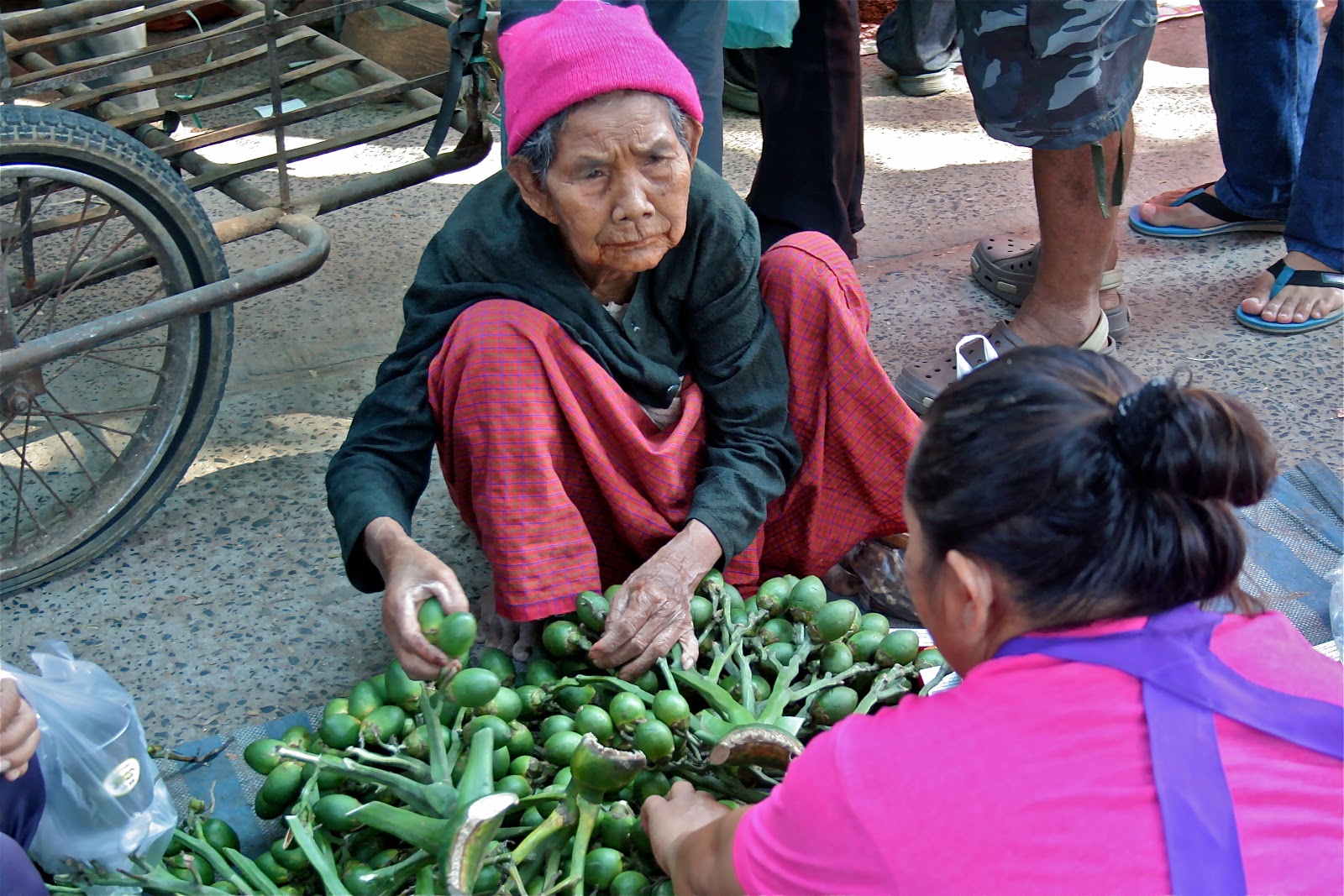 |
| Market in Surin province. One can hear four languages spoken here: Southern Isan, Thai, Khmer (Cambodian) and Lao. Don't count on having a conversation in English. |
 |
| Mounds of fresh fruits and vegetables at a fraction of the cost in a supermarket. |
 |
| Choosing the best limes. The village market also serves as a meeting place and social center. |
The "simple life" could well apply to the laid back atmosphere in Thailand's rural villages where people may not have much money, and work very hard, but they do have a sabai way of life. When spending time in the villages, it is easy to see why Thailand is called The Land of Smiles.
 |
| Picnic in a truck bed, eastern Thailand |
 |
| Hot chili peppers at an Isan street market |
 |
| Careful grooming, Thai style with tweezers and car mirror |
 |
| Isan farmer |
 |
| Local fermented fruit juices, not found in supermarkets! |
 |
| A grandmother at home in a small village. The house sits raised above the open floor seen here. Village Thais generally sit and sleep on woven reed mats. I met folks who, despite having a bed in their new house, still prefer to sleep on the floor. |
 |
| Village shrimp fisherman with homemade traps |
 |
| Typical village home with tractor, water storage aungs and drying laundry |
One doesn't need to travel far from the city to find village life. The following photos were all taken in Bangkok suburbs where water buffalo still roam and fishermen cast their nets.
 |
| A small shoe repair shop in eastern Bangkok |
 |
| Water buffalo wallow, Bangkok suburb |
 |
| Traditional alms collection by monks each morning in a middle class Thai neighborhood, eastern Bangkok |
 |
| Nurses opt for street food over hospital cuisine. |
 |
| Street market tobacconist |
 |
| Street market food stall |
 |
| Sidewalk amulet salesman |
 |
| Carefully checking amulet quality and authenticity |
 |
| Variety of amulets |
 |
| A happy life on a klong (canal) |
 |
| A fisherman checks his net. Most fish were thrown back ("Gin mai dai," Can't eat them!) including the one in upper left that just received a reprieve when tossed over the fisherman's shoulder. |
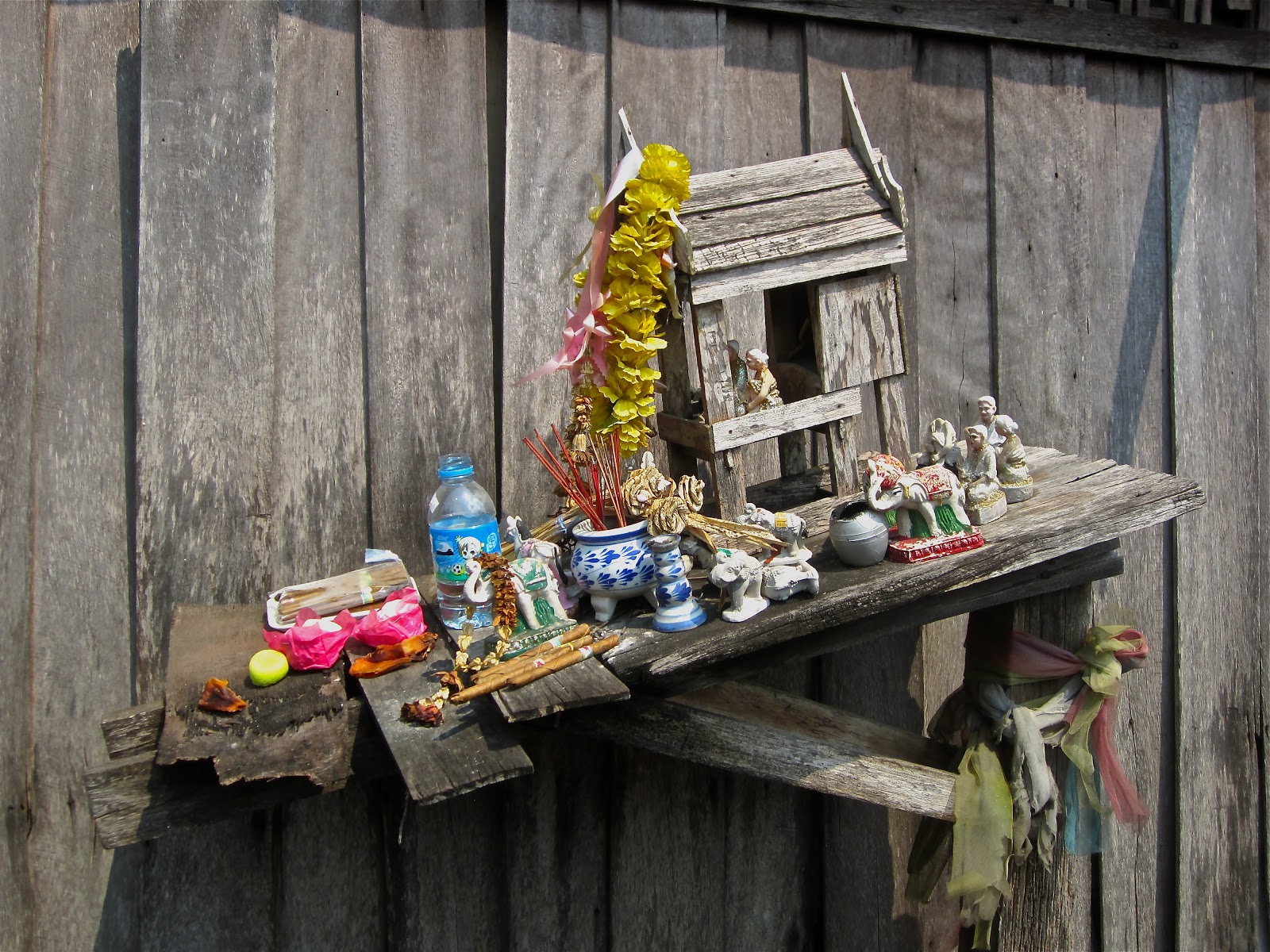 |
| An aged spirit house along a klong in eastern Bangkok |
 |
| Catching a quick nap in the shade at midday. |
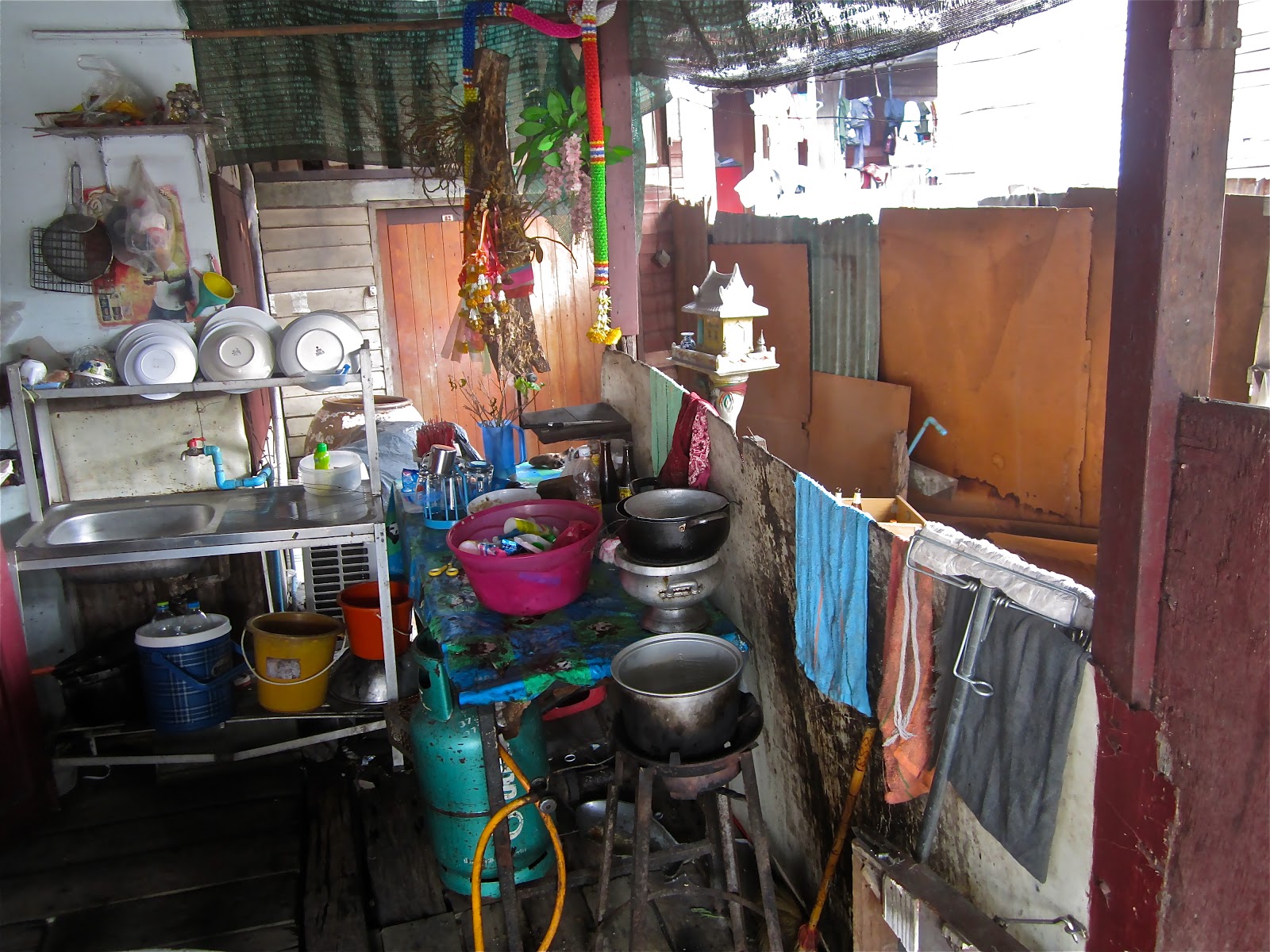 |
| Traditional Thai kitchens were once only found outdoors like this one for obvious reasons in the tropics. New homes enclose the kitchen, and then include air conditioning. |


